
AI
AI Can Write 80% of Your Code. Who Takes Responsibility When It Breaks?
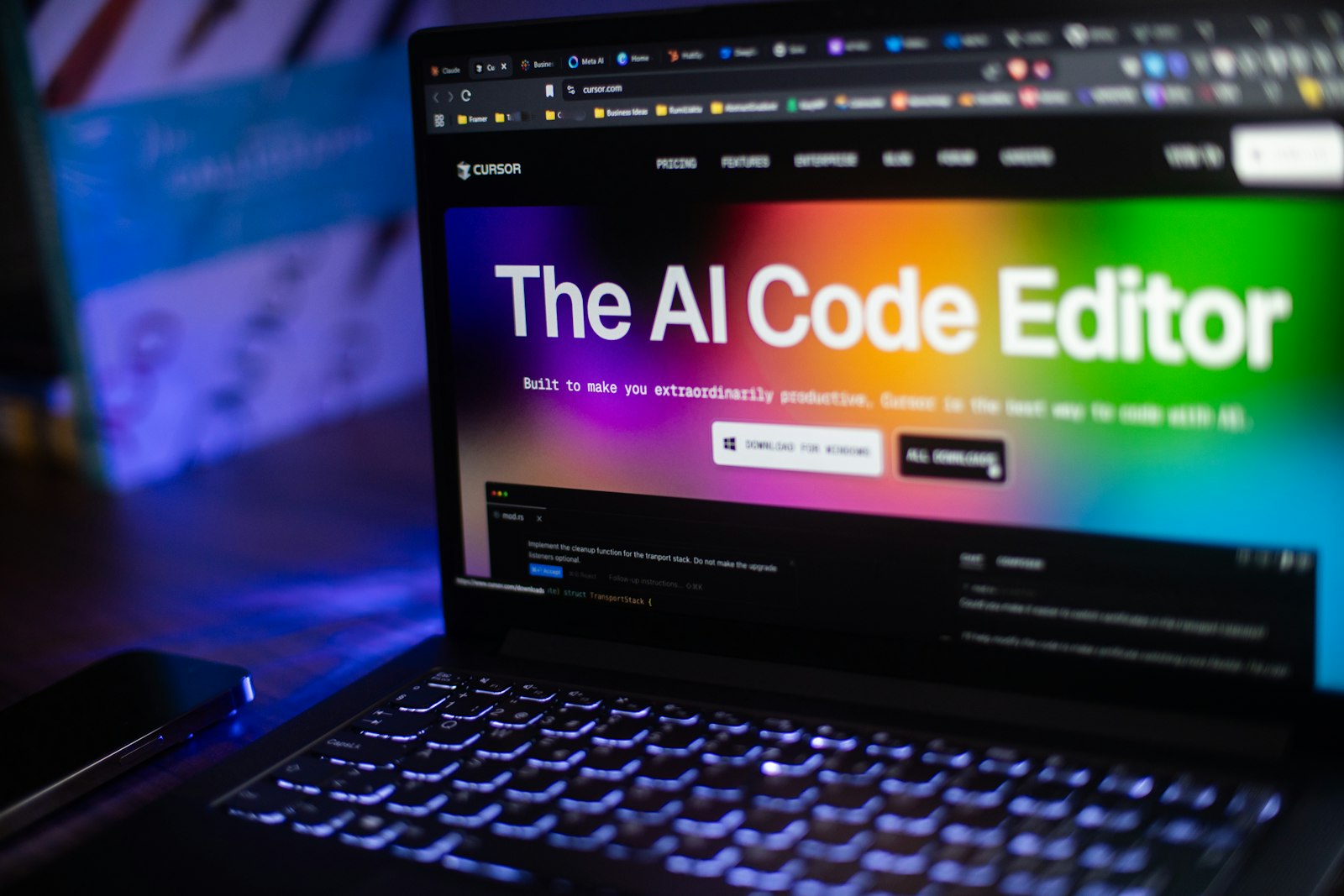
AI Is Changing How Software Gets Built
Software development has traditionally involved developers manually writing, testing, debugging, and maintaining code. AI is changing that workflow.
Today, developers can describe what they want in natural language and have AI generate:
React components
API endpoints
Database queries
Unit tests
Documentation
Refactoring suggestions
Error fixes
UI layouts
Boilerplate code
This doesn't necessarily mean developers are disappearing. Instead, the work is shifting from writing every line of code toward designing systems, reviewing implementations, solving complex problems, and making technical decisions.
What If AI Really Writes 80% of the Code?
Imagine starting a new application where AI generates most of the initial implementation.
The development process could become dramatically faster.
A developer might spend less time writing repetitive code and more time describing requirements, reviewing generated solutions, testing edge cases, and improving the overall architecture.
But there is an important catch:
More generated code doesn't automatically mean better software.
AI can produce code that looks correct while still containing security vulnerabilities, inefficient logic, poor architecture, or hidden assumptions.
The difficult part of software development has never been simply typing code.
It is understanding what should be built and why.
Developers Will Become More Like Architects and Reviewers
As AI handles more implementation work, developers may increasingly focus on higher-level responsibilities.
Instead of spending hours creating repetitive components, developers can spend that time on:
System architecture
Business logic
Security
Performance
Scalability
Code review
Testing strategy
User experience
Technical decision-making
This could make experienced developers even more valuable.
The ability to write code remains useful, but the ability to understand code becomes even more important.
The Biggest Problem: Who Is Responsible?
Suppose an AI-generated function introduces a security vulnerability.
Who is responsible?
The AI?
The company that created the AI?
The developer who accepted the generated code?
The organization that deployed the application?
In production software, responsibility cannot simply be delegated to an AI tool.
Developers and organizations still need to understand, review, test, and take ownership of the software they deploy.
This is why blindly accepting AI-generated code can become dangerous.
AI-Generated Code Can Create Technical Debt
AI makes it incredibly easy to generate code.
That can also make it incredibly easy to generate too much code.
A developer might ask AI to solve a problem and receive hundreds of lines of implementation when a much simpler solution would have been better.
Over time, this can create:
Unnecessary dependencies
Duplicate logic
Complicated architecture
Difficult-to-maintain components
Performance problems
Security risks
Technical debt
The speed of AI-assisted development therefore needs to be balanced with good engineering practices.
Testing Becomes More Important, Not Less
If developers write less code themselves, testing becomes increasingly important.
AI-generated code should still go through appropriate:
Code review → Automated testing → Security testing → Performance testing → Human validation
AI can help create tests, but teams should not assume that generated tests guarantee that an application is correct.
A test can confirm that the code behaves as expected for known scenarios. It doesn't necessarily prove that the application handles every real-world scenario correctly.
So, Will AI Replace Developers?
Probably not in the simple way people imagine.
Instead, AI is more likely to replace parts of the development process.
Developers who spend most of their time writing repetitive boilerplate may see the biggest changes.
Developers who understand architecture, business requirements, security, performance, and complex systems can use AI as a powerful multiplier.
The future may not be:
AI vs Developers
It may be:
Developers who use AI vs developers who don't.
The Developer of the Future
The strongest developers may not necessarily be the ones who can type the fastest.
They will be the ones who can:
Ask the right questions
Understand system architecture
Evaluate AI-generated solutions
Identify incorrect assumptions
Detect security vulnerabilities
Debug complex systems
Understand business requirements
Make sound technical decisions
AI can generate an implementation.
But deciding whether that implementation is correct, secure, scalable, and appropriate still requires engineering judgment.
Final Thoughts
AI is not simply making software development faster.
It is changing what software development means.
When AI can generate a large percentage of an application's code, the developer's value shifts from writing code toward engineering decisions.
The real competitive advantage won't come from generating the most code.
It will come from knowing which code should exist in the first place.
“AI may write the code, but humans still own the decisions, the architecture, and the consequences.”