
Technology
Green Software: Every Wasted CPU Cycle Has a Power Bill
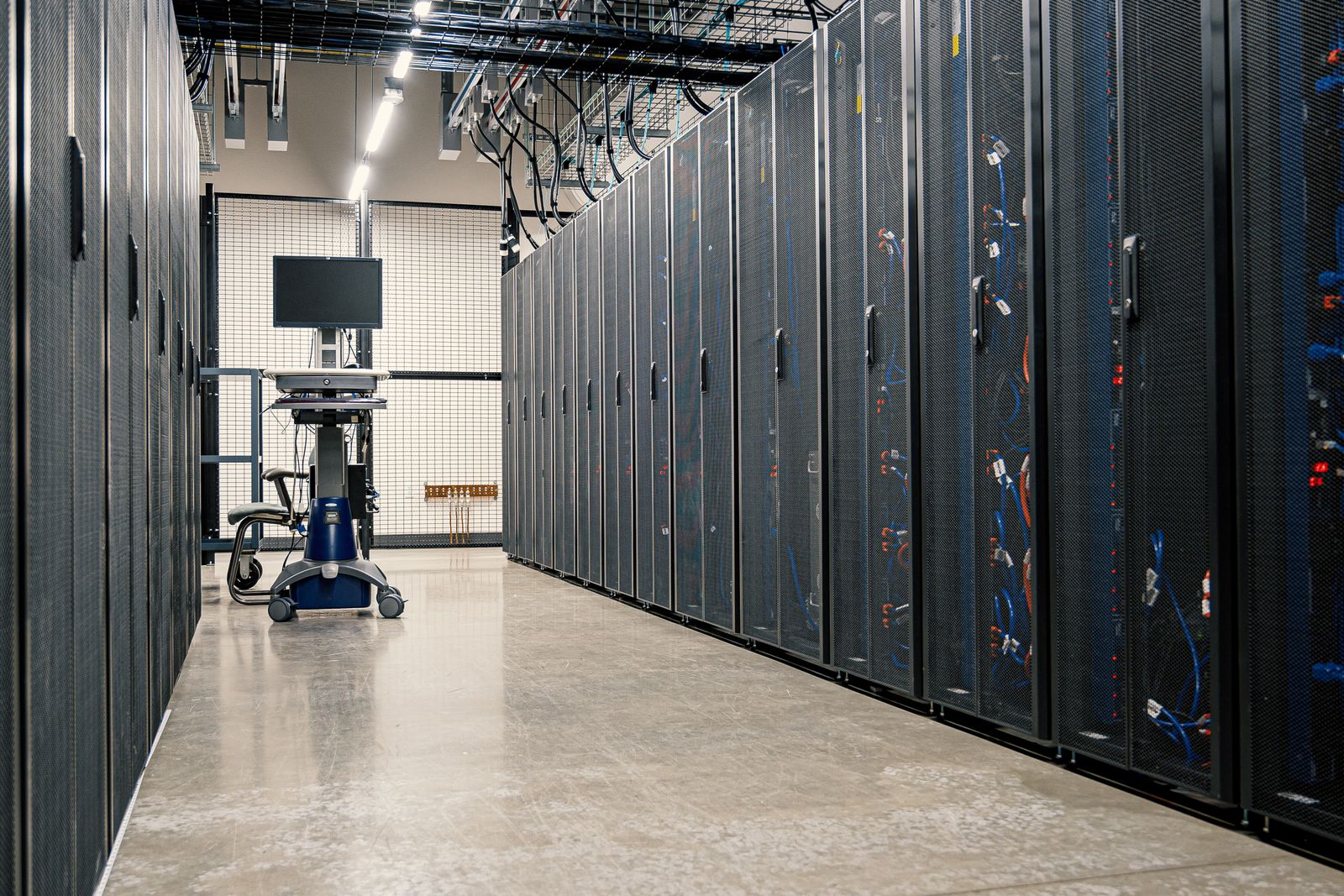
Somewhere behind every app you ship, there is a room like the one in the photo above: long aisles of humming racks, all drawing electricity around the clock. Your code runs there. Every needless query, oversized image and chatty API call turns into watts, and watts turn into an invoice. Green software is the idea that writing efficient code is good for the planet and good for the budget at the same time.
What "green software" actually means
Green software engineering is the practice of building applications that use less energy and hardware to do the same useful work. It isn't about buying offsets or putting a leaf on your logo. It is about engineering choices: how much compute you request, when you run it, and where it runs.
The useful mental model has three levers:
- Energy efficiency: do the same work with fewer CPU cycles, less memory and less data moved.
- Hardware efficiency: use fewer machines, and keep the ones you have well utilised rather than mostly idle.
- Carbon awareness: run flexible workloads when and where the electricity grid is cleaner.
Why business readers should care
Cloud bills are largely a measure of resources consumed. When a team trims waste, the cost usually falls with it. Efficiency work tends to improve speed too, since less work means faster responses. And more customers and partners now ask vendors about the environmental impact of their digital products, so having a clear answer is becoming a practical advantage.
None of this requires a rewrite. Most of the gains come from removing waste that nobody noticed.
Where the waste hides
1. Over-provisioned infrastructure
Servers sized for a peak that happens twice a year, running at low utilisation the rest of the time, still consume power. Right-sizing instances, autoscaling properly and shutting down idle environments (staging, demos, forgotten test clusters) is often the easiest win.
2. Inefficient data handling
Fetching more than you need is expensive in compute and in network transfer. Look for N+1 query patterns, missing indexes, unbounded list endpoints and APIs that return whole objects when the client needs two fields. Pagination, caching and compression all reduce the work done per request.
3. Heavy front ends
Large JavaScript bundles and unoptimised images make every visitor's device work harder and move more bytes over the network. Modern image formats, lazy loading, code splitting and removing unused dependencies make pages lighter and faster.
4. Always-on background jobs
Polling loops, cron jobs that run far more often than needed, and logs written at debug level in production all quietly burn resources. Ask of each: does this need to run now, and this often?
5. Data that never gets deleted
Storage is not free. Old backups, duplicate datasets and logs kept forever add up. Define retention rules and enforce them.
Carbon-aware scheduling
Not all electricity is equally clean, and the mix varies by region and by time of day. Some work doesn't care when it runs: nightly reports, batch data processing, model training, media transcoding. For those jobs, you can shift execution to a cleaner time window or a cleaner region where your compliance and latency requirements allow. Several cloud providers and open tooling offer grid carbon data you can plug into a scheduler. Start by identifying which of your jobs are genuinely flexible.
A practical starting plan
- Measure first. Look at your cloud cost and utilisation dashboards. Cost and CPU usage are decent proxies for energy use, and you probably already have them.
- Pick the top three offenders. Usually a few services, queries or jobs account for most of the consumption.
- Fix the cheap things. Right-size, add caching, compress responses, turn off idle environments.
- Make it a habit. Add efficiency to code review: "Does this query need to run on every request?" Track resource use per feature in your regular reviews.
- Schedule flexible work smartly. Move batch jobs to times or regions that suit both your cost and your carbon goals.
A word of caution
Be wary of vague green claims. Measure what you can, be honest about what you can't, and avoid presenting small tweaks as dramatic impact. Real progress comes from steady, verifiable improvements, not slogans. Also, don't trade away reliability or security for efficiency; the goal is less waste, not fragile systems.
The bottom line
Efficient software is cheaper to run, faster to use and lighter on the grid. You don't need a new platform to begin. You need to look at what your code is actually doing and ask whether it all needs to happen. Every cycle you save is one that never has to be paid for.
Want to find out where your application is wasting resources? Talk to Annz Tech, and we'll help you build software that is faster, leaner and cheaper to run.
The greenest server is the one your code never needed to wake up.